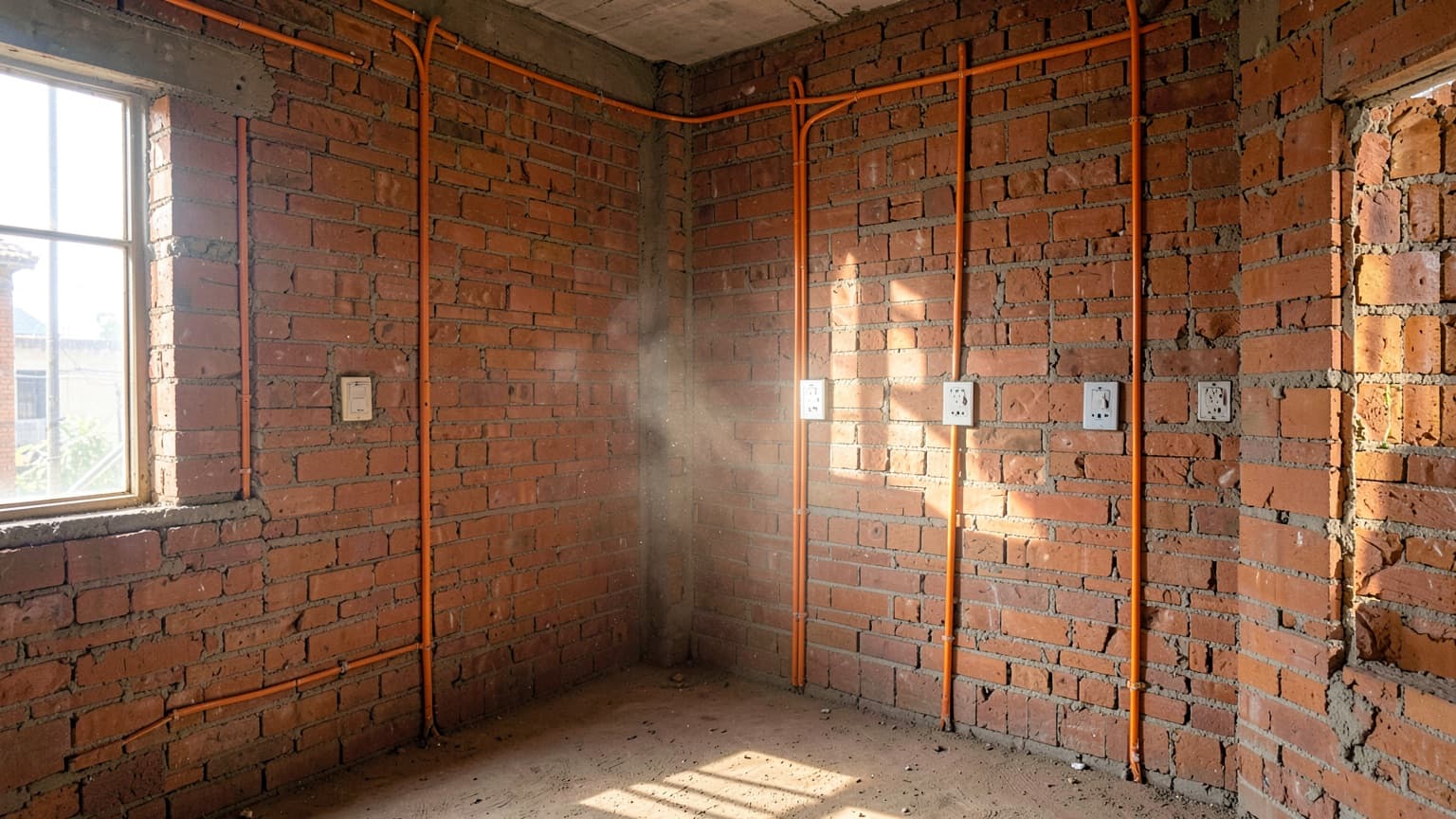
The cheapest time to make a home smart is before the walls are plastered. Once conduits are buried, every change means chasing walls, patching and repainting. Here is what to get right while the brickwork is open.
Run a neutral to every switch box
Smart switchboards need a neutral wire at the box to power their electronics. Many older homes only bring phase and load wires to switches. Ask your electrician to run neutral everywhere — it costs almost nothing now.
Size boxes for the modules you want
Decide whether you want horizontal plates (the familiar Indian layout) or vertical and square modern plates, and size each box accordingly. Leave space for sockets and USB-C where you will charge devices.
Plan a separate low-voltage network
- Cat6 cable to each room for Wi-Fi access points and TVs
- Conduits for CCTV cameras at gates and entrances
- A run to the gate for an automatic gate motor and video door phone
- Sensor points near windows, the kitchen (gas) and bathrooms (leaks)
Think about the roof and the parking
Leave a conduit from the roof to the electrical panel for future solar, and a dedicated 32 A circuit to the parking area for an EV charger. Both are painful to add later.
Water and curtains
Bring power and a signal cable to the overhead tank and the pump for level automation, and a power point at the top corner of every large window for motorised curtains.
Protect everything at the panel
Use an RCCB for shock protection, a surge protector for lightning and voltage spikes, and separate MCBs for heavy loads like ACs and geysers. Smart switches add protection per device, but they work best on a well-designed panel.
Knatra Complete covers all of this as one package — design, wiring, devices and handover. If you are building now, a free site survey before plastering can save you lakhs in rework.