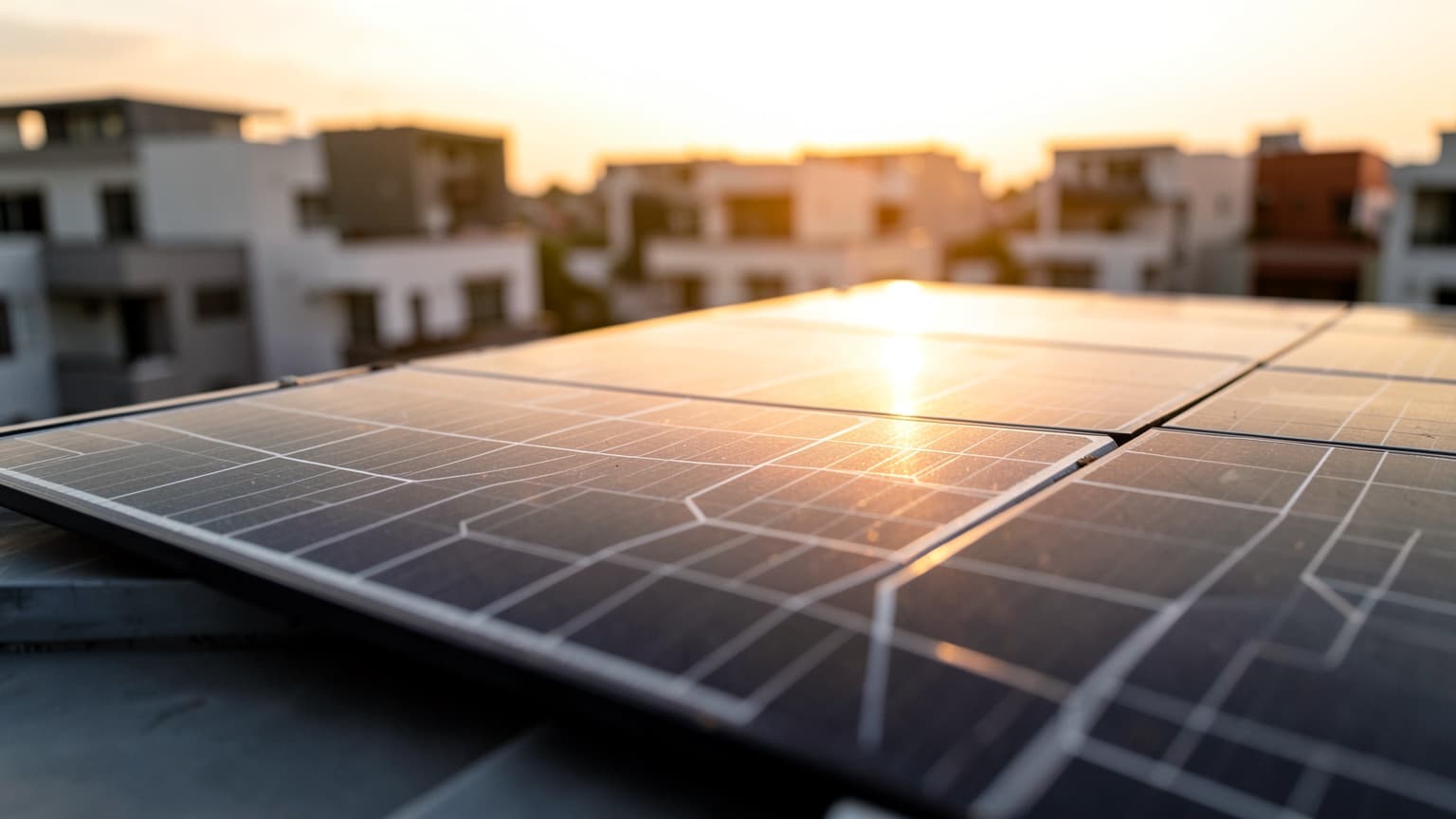
Rooftop solar can bring a typical home’s electricity bill close to zero. Adding a battery keeps the lights, fans and Wi-Fi running through power cuts. Here is how the costs and subsidy work.
The subsidy
Under PM Surya Ghar, the central subsidy for residential rooftop solar is ₹78,000 for systems of 3 kW and above. It is calculated on the solar panels only — batteries are not subsidised. Some states add their own incentives, which change often.
How big a system do you need?
In most of India, each kilowatt of panels produces roughly 4 units a day, or about 120 units a month. A home using 400 units a month needs around 3–4 kW — less if you first cut waste with BLDC fans and automation.
On-grid, or hybrid with battery?
- On-grid: lowest cost, exports surplus through net metering, but switches off during a grid outage for safety
- Hybrid with battery: costs more, but powers your home through outages and stores daytime solar for the evening
- A 5 kWh LFP battery comfortably runs lights, fans, Wi-Fi and a fridge through a typical evening outage
Why pair solar with smart switches?
During an outage, a smart home can automatically drop heavy loads like the geyser and AC, so the battery lasts all night for what matters. Day to day, it shifts loads like the water pump to when the sun is shining.
Knatra Complete’s Estate package includes hybrid solar, battery storage and whole-home energy management, with the subsidy and net-metering paperwork handled for you.